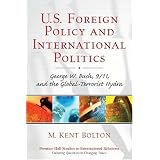
Average Reviews:

(More customer reviews)Is an excellent resource and detailed historical account, but also reads like a novel from the unique perspective of several notable participants. Dr. Bolton places these startling events in the construct of an analytic model from which additional pivotal events can also be viewed and evaluated, and leads the reader through a discovery of seemingly unrelated events that prepare the world stage for the 'hydra' of modern terrorism. Calling to mind the ancient vision of the vicious 'hydra' - a monster capable of an infinite number of "heads" - a new one grown even as older ones are lopped off by the great sword of a combatant - presents an tireless antagonist which bears an all too real similarity to the eerie reality of the world in which we find ourselves - attempting to defeat an enemy with a seemingly inexhaustible amount of energy and skill. Defining terrorism in terms of this montrous hydra sets the stage for the battle of nation states against the terrorist elements that exist across the far-flung posts of the globe. How next do we move onward?
Click Here to see more reviews about: U.S. Foreign Policy and International Politics: George W. Bush, 9/11, and the Global-Terrorist Hydra
Employing an analytic construct known as a comparative, foreign-policy analysis framework, the author compares substantive changes in U.S. foreign policy and international politics at two crucial junctures in American history: post-WWII period in which the Cold War began altering U.S. foreign policy for the subsequent fifty-years period versus post 9/11 attacks on the U.S. The volume's framework lends itself to a multi-causal view of foreign policy including multiple theories and permits readers to determine what theories best explain changes in U.S. foreign policy. The volume provides a conceptual definition of foreign policy and examines external inputs, societal, governmental and individual and role inputs to U.S. foreign policy. For those interested in a comprehensive analysis of post-9/11 U.S. foreign policy.


0 comments:
Post a Comment